Golf Carts, Buggies & Walking at Thai Courses
Key takeaways
- Golf carts in Thailand are optional at many courses but compulsory at a number of premium resorts, so check each course policy before you book.
- Caddies are effectively mandatory at Thai courses, and the caddie usually drives the cart when one is used.
- Walking with a caddie is allowed at some courses, but carrying your own bag is not standard practice in Thailand.
- Expect a separate cart fee on top of the green fee and caddie fee, paid per buggy for the round.
- Cooler months from November to February are the most comfortable time to walk a full 18 holes in the Thai heat.
Golf carts in Thailand are optional at many courses and compulsory at a number of premium resorts, so the right answer depends on where you tee off. For most international visitors, the real question is whether a given course lets you leave the buggy in the barn and walk with your caddie instead. This guide explains when carts are required, what the buggy fee covers, how GPS-equipped carts work, and the etiquette that keeps a round moving in the heat.
Understanding how golf carts in Thailand fit alongside the near-universal caddie system will save you money, confusion, and a few awkward moments on the first tee. Thailand runs its courses differently from most Western clubs, and a little preparation goes a long way.
Are Golf Carts Mandatory or Optional in Thailand?
Golf carts in Thailand sit somewhere between optional and expected, and the policy changes from course to course. Many clubs let you decide between riding and walking, while several high-profile resort courses make a buggy compulsory for every group. Premium venues in particular tend to require carts to protect pace of play and to keep groups spaced out across the layout.
The key thing to understand is that a cart decision is separate from the caddie decision. At most Thai courses a caddie is effectively mandatory regardless of whether you ride or walk, which is the opposite of the "cart plus no caddie" default that many visitors are used to back home. If you want to know more about how the caddie system works, our guide to golf caddies in Thailand covers expectations and tipping in detail.
Before you book, confirm three things for each course: whether a cart is compulsory, whether walking with a caddie is permitted, and how the fees stack up. Policies are not standardized across the country, so the course that required a buggy yesterday may let you walk the next day.
Cart Fees, Buggy Types and GPS-Equipped Carts
A golf cart in Thailand is charged as its own line item, separate from the green fee and the caddie fee. You typically pay per buggy for the full round, and two players often share a single cart. Rates vary widely by course tier, with budget municipal courses sitting far below the signature resort layouts, so the smartest move is to confirm the exact cart fee when you reserve rather than assuming a flat national rate.
Most Thai buggies are standard two-seat electric carts with space for two bags at the rear. At higher-end courses you will increasingly find GPS-equipped carts fitted with a dashboard screen that shows yardage to the green, hole layouts, and sometimes food-and-beverage ordering. The GPS display is genuinely useful on unfamiliar courses where you cannot eyeball distances, and it speeds up club selection when you are playing a layout for the first time.
When you add up the cost of a round, remember that the cart fee is only one piece. To see how it fits with everything else, our breakdown of Thailand green fees and what a round costs in 2026 puts the buggy charge in context alongside green fees, caddie fees, and tips.
What the cart fee usually includes
The buggy fee covers the cart for the round, typically shared between two players. It does not include the caddie, who is billed separately, and it does not include the customary caddie tip. If rain forces a course onto restricted cart rules partway through your round, you still pay the standard fee, so factor the cart in as a fixed cost rather than a pay-as-you-go extra.
Walking the Course With a Caddie: When It's Allowed
Walking is allowed at a fair number of Thai courses, and when it is permitted you walk alongside your caddie rather than carrying your own bag. Carrying your own clubs is not standard practice in Thailand. The caddie carries the bag on foot or, where a cart is involved, loads it onto the buggy and walks or rides with you. This is a cultural norm as much as a rule, and clubs are set up around it.
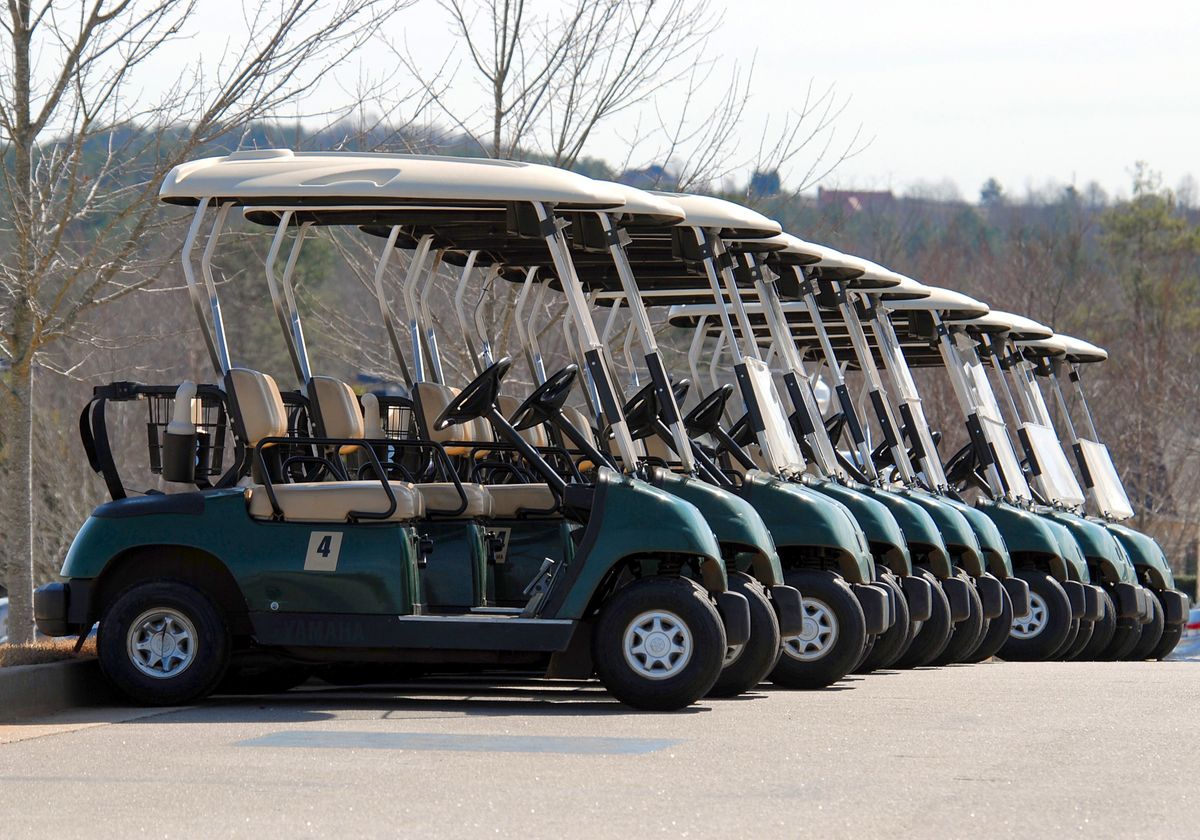
Courses that market themselves as walkable, including several in Phuket and the northern hills, will state that carts are optional. At those venues you can take a caddie, leave the buggy behind, and enjoy the round on foot. At compulsory-cart courses you can still choose to walk much of the time while the caddie drives the buggy alongside, which gives you the exercise of walking without breaking the course policy.
On-Course Etiquette for Carts, Cart Paths and Wet Weather
Cart etiquette in Thailand follows the same logic as anywhere: keep buggies off tees and greens, follow cart-path signs, and give the group ahead room. Because caddies usually drive, much of the path discipline is handled for you, but it still helps to know the conventions so you can keep pace and avoid damaging the course.

A few core habits cover most situations:
- Keep carts on paths near tees and greens, and follow any directional signs or ropes.
- Park the buggy on the exit side of a green, pointed toward the next tee, to save time.
- After heavy rain, expect a "cart path only" or "90-degree" rule that keeps buggies on firm ground and off soggy fairways.
- Never drive through casual water, wet bunkers, or marked ground-under-repair areas.
- Let faster groups through, and do not stack carts up behind a slow group ahead.
Thailand's tropical weather makes the wet-weather rules especially relevant during the rainy season, roughly May to October in much of the country. When storms pass through, courses protect saturated turf by restricting where buggies can go, and following those restrictions keeps the fairways playable for everyone behind you.
Tips for Golfers Who Prefer to Walk Versus Ride
Choosing between walking and riding in Thailand comes down to climate, fitness, and the kind of round you want. Walking burns noticeably more energy: an independent review of research summarized by equipment maker Bag Boy found golfers burning roughly 700-plus calories walking nine holes with a push cart compared to just over 400 when riding, a difference the same source puts at about 36 percent more calories per hour on foot. In Thailand you walk with a caddie rather than a push cart, but the broader point holds: walking is the more active way to play.
Heat is the deciding factor for many visitors. From March to May, and through the humid rainy months, riding a buggy is the comfortable choice, and even then you will want plenty of water and sun protection. The cooler, drier window from November to February is the easiest time to walk a full 18 holes without wilting.
If you want to ride, a few habits make the round smoother:
- Share a buggy with your playing partner to keep fees down and groups tight.
- Use the GPS screen, if the cart has one, to speed up club selection on unfamiliar holes.
- Keep a drink and a towel on the cart, because the tropical sun is relentless even with a roof over your head.
If you would rather walk, favor courses that advertise carts as optional, book in the cool season, and tell your caddie early that you plan to be on foot so they can pace the bag accordingly. A good tour operator can match you to the right courses: Thailandgolftour builds itineraries around how you actually like to play, including walkable layouts and cool-season tee times, so the cart question is sorted before you arrive.
Your next step is simple: when you request your tee times, ask the operator to confirm each course's cart policy in writing, then pack and plan around it. That one question up front removes the only real surprise golfers hit at the first tee in Thailand.
Frequently asked questions
Are golf carts mandatory in Thailand?
It depends on the course. Many Thai courses let you choose between walking and riding, but several premium resort courses make a cart compulsory. Always confirm the policy when you book.
Do I still need a caddie if I take a golf cart in Thailand?
Yes. Caddies are effectively mandatory at Thai golf courses whether you ride or walk. When you take a buggy, the caddie generally drives it and manages your clubs and the flag.
Can I walk and carry my own bag at a Thai golf course?
You can often walk, but carrying your own bag is not standard in Thailand. Your caddie carries the bag on foot or loads it onto the cart, so plan to walk alongside the caddie rather than haul clubs yourself.
How much does a golf cart cost in Thailand?
Cart fees are charged separately from the green fee and caddie fee, usually per buggy for the full round. Rates vary widely by course tier, so budget for a cart line item and confirm the exact figure at booking.
Is walking or riding better in the Thai climate?
Riding is easier in peak heat and humidity, while walking suits the cooler season from November to February. Hydration and sun protection matter either way given the tropical conditions.


