Pairing Golf With Thai Food: A Culinary Golf Trip
Key takeaways
- Thailand has more than 250 golf courses and year-round playing conditions, making it easy to pair a round with a meal (Tourism Authority of Thailand, 2026).
- The MICHELIN Guide Thailand 2026 recognises 468 restaurants, from Bib Gourmand street food to two Three-Star tables, so food variety is built in.
- Clubhouse dining at major courses almost always includes proper Thai dishes, not just Western snacks, so plan at least one on-course meal.
- Build rest days around a market tour or cooking class so non-golfers in the group stay engaged.
- Tell your tour operator about dietary needs early; most Thai kitchens adjust spice and swap ingredients on request.
You can play a world-class round in the morning and eat one of Asia's best meals that same evening, often within half an hour of each other. That is the simple appeal of combining golf and food in Thailand, where more than 250 courses sit close to some of the most celebrated kitchens anywhere. This guide shows how to turn two separate interests into one itinerary.
Thailand earns its reputation on both counts. The Tourism Authority of Thailand counts more than 250 golf courses with year-round playing conditions (Tourism Authority of Thailand, 2026). On the food side, the MICHELIN Guide Thailand 2026 recognises 468 restaurants in total. Put those two numbers in the same trip and a round of golf becomes the frame for a genuine culinary tour.
Why golf and food in Thailand make an unforgettable trip
The reason golf and food Thailand trips work so well is proximity: great courses and great kitchens share the same cities. The MICHELIN Guide Thailand 2026 lists 468 restaurants, spanning 137 Bib Gourmand spots known for value through to two Three-Star tables (Tourism Authority of Thailand, 2025). That range matters on a golf trip.
After eighteen holes you might want a cheap, fiery bowl of noodles near the course. The next night you might want a tasting menu. Thailand lets you do both without changing cities. Bangkok alone pairs dozens of courses with the country's densest cluster of recognised restaurants.
The food also rewards curiosity. Northern Thai cuisine in Chiang Mai tastes nothing like the seafood of the southern coast. A multi-region golf trip doubles as a regional food tour, and that variety is what makes the holiday stick in memory long after the scorecards are filed away.
Clubhouse dining and signature Thai dishes at top courses
Most clubhouses at Thailand's major courses serve proper Thai food, not just burgers and club sandwiches. Expect regional staples such as green curry, tom yum goong, pad thai and som tam alongside Western options. Thailand's national standard for everyday cooking is high, and clubhouse kitchens benefit from it.
A post-round meal on the terrace is one of the quiet pleasures of golf here. Prices sit above street-stall level but stay reasonable against what you would pay for comparable quality back home. Order a fresh coconut, a plate of cashew chicken and a mango sticky rice, and the round feels complete.
Dress codes still apply in and around the clubhouse, so it helps to know the norms before you sit down to eat after your round. If you are weighing which courses to build a trip around, start with stay-and-play resorts where the dining is part of the package. The food quality at these properties is often a deciding factor, not an afterthought.
Off-course food experiences near golf regions: street food to fine dining
Thailand's best eating often happens off the course, and every major golf region has its own scene. Street food is the heart of it, and the MICHELIN Guide Thailand 2026 awards 137 Bib Gourmand distinctions to affordable spots that serve genuinely excellent food. Many of these sit within easy reach of the courses golfers already play.
In Bangkok, the gap between a tee time and a tasting menu is a short taxi ride. The city holds Thailand's heaviest concentration of starred restaurants, including Sorn, one of only two Three-Star tables in the country, which serves southern Thai cuisine. A golf trip based in and around the capital, with its dozens of nearby courses, gives you the widest food range of anywhere in the kingdom.
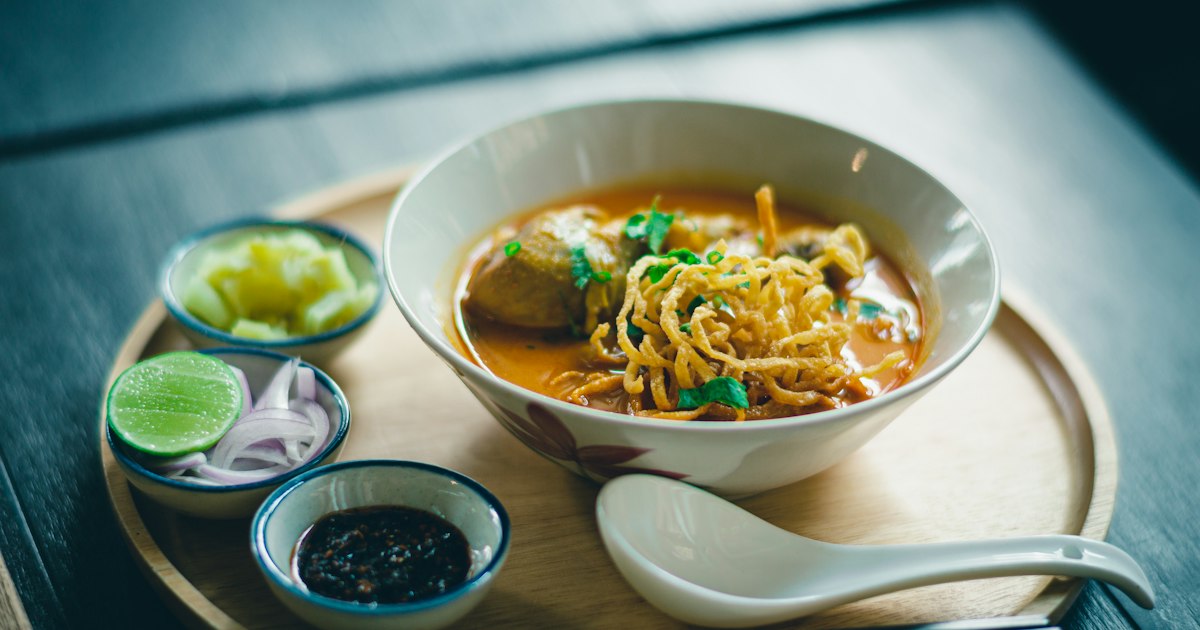
Coastal and mountain regions trade breadth for specialty. Hua Hin and the south lean on grilled seafood and fresh fish. Chiang Mai serves khao soi, a curried noodle dish that defines the north. Plan your evenings around the local specialty, and the food becomes a reason to move between regions rather than a detail you fit in around golf.
Planning rest-day cooking classes and market tours for your group
A rest day between rounds is the ideal slot for a cooking class or market tour, and it keeps everyone in the group engaged, golfers and non-golfers alike. Half-day classes are widely available in Bangkok, Chiang Mai and Phuket. Most begin with a guided walk through a fresh market, then move to a kitchen where you cook three or four classic dishes.
These experiences solve a common group problem. Not everyone wants to play every day, and not every partner golfs at all. A market tour gives the group a shared activity that has nothing to do with handicaps. For more ideas on keeping everyone happy, see our guide to Thailand golf trips for non-golfing partners.
A good tour operator handles the logistics so a cooking class slots in cleanly. Thailandgolftour can arrange a class or market visit for the whole group on a non-golf day, matching it to where you are staying and the courses you are playing, so nobody loses a morning to planning.
Book the class for a day when the group is not teeing off early. Markets are busiest and freshest in the morning, and a relaxed afternoon afterwards is the natural reward.
Dietary needs and tipping etiquette at Thai clubhouses
Thai kitchens are flexible, so dietary needs rarely cause problems if you flag them in advance. Authentic Thai food can be genuinely spicy, but almost every kitchen, clubhouse restaurants included, will reduce the chilli on request. The phrase "mai phet" means not spicy. Vegetarian, vegan and allergy swaps are usually possible when the kitchen knows ahead of time.
Tell your tour operator about any restrictions when you book. Passing that information to clubhouses and restaurants in advance works far better than explaining at the table, especially for serious allergies where a language gap could matter.
On tipping, Thai clubhouse restaurants follow relaxed rules. A tip is appreciated but never required. Rounding up the bill or leaving a small amount of loose change for good service is normal and welcome. Keep this separate from caddie tipping on the course, which has its own custom and is handled hole by hole rather than at the table.
Building a golf-and-food itinerary into your tour package
The smartest way to combine golf and food is to design the itinerary around both from the start, rather than bolting meals onto a golf schedule. Thailand's course density makes this practical: with 250-plus courses near major food cities, you rarely drive far between a fairway and a famous kitchen.
A workable week might open with two or three rounds near Bangkok, each followed by a different style of dinner, from street-side Bib Gourmand to a starred table. A mid-trip rest day brings a market tour and cooking class. The back half shifts to a coastal or northern region for seafood or khao soi and one or two scenic rounds.
Pace matters. Alternate playing days with food-focused days so neither interest fatigues the group. Leave evenings loose enough to follow a recommendation you hear from a caddie or a fellow traveller, because some of the best meals are unplanned.
If you would rather hand the logistics to someone who knows both the courses and the kitchens, a tailored package is the cleanest route. Ask Thailandgolftour to weave a cooking class and a short list of restaurants into the schedule alongside your tee times, matched to where you are staying. That single conversation turns two hobbies into one well-run holiday, so send the team your dates and let the itinerary come back built around both.
Frequently asked questions
Is it easy to combine golf and food on a Thailand trip?
Yes. With more than 250 courses clustered near food-rich cities like Bangkok, Chiang Mai and Hua Hin, you can play a morning round and eat a world-class meal the same day with little driving.
Do Thai golf clubhouses serve real Thai food?
Most do. Clubhouses at major courses serve full Thai menus alongside Western options, often featuring regional dishes. Prices are higher than street stalls but still reasonable by international standards.
Can I book a cooking class during a golf trip?
Yes. Half-day cooking classes and market tours are widely available in Bangkok, Chiang Mai and Phuket, and they slot neatly into a rest day between rounds. A tour operator can arrange one for the whole group.
How spicy is Thai food, and can kitchens adjust it?
Authentic Thai food can be very spicy, but most kitchens, including clubhouse restaurants, will reduce chilli on request. Say 'mai phet' for not spicy. Vegetarian and allergy swaps are usually possible with notice.
Do I tip at a Thai golf clubhouse restaurant?
Tipping is appreciated but not obligatory. Rounding up the bill or leaving a little loose change is normal. This is separate from caddie tipping, which follows its own custom on the course.


